The Name of the Computer

The human being had her natural environment, and now she lives with the computer.
The name of the computer is not carefully selected. There is no symbolism to computers. Everyone knows what a computer is. If there’s a screen and a keyboard, that’s a computer. Humans do spectacularly well on tests to spot computers.
No one invented the computer and nobody came up with the name. He came out of this world and he turned out to be good at mass producing. The average age of the computer is four years, after that it’s up to luck what happens to him. More on this later on.
The computer is rarely found by itself. There’s usually someone who looks after it. She’s the user.
It is not clear what the computer does. It was meant to be an assistant. That was when there were no users. Assistants are accustomed to tasks that they know beforehand.The computer, however, is not an assistant. Now it’s a part of nature. It’s well recognized and respected. People know a computer when they see one.
A phone is not a computer. The identity of the computer is something that it has deserved and earned. It is something more than what it does. The user knows what a computer is, and what a phone is. A home is not complete without a computer. The computer may need electricity to work, but so do toasters. The computer is as homely as a couch.
The computer lends itself to use only when certain body formations are in place. These are very demanding, and will cut the user out of life. Response time will be considerably reduced. For anyone else, this is a special case. For the user, living with the computer is living the good life.
Just as there is no basic universal person, found by itself (there it is! The ideal human). We can’t have this way of being. But there are plenty of people, and plenty of computers. Someone with a computer is now a part of nature.
Every decade, the computer goes for a new part of the human body. The shoulder and the hips he has conquered already. Now the computer aims for the eyes. For all of this he needs agents.
Nowadays, he prefers the outer edge of the right hand, or technically, the dominant hand. The sign finger, unbeknownst to itself, carefully manages the operation to suit the computer’s needs. The computer also appears to have an idea of what the user is up to. The computer wants the user to succeed.
It would be unfair to say this is all done without conscious intent. This is not the case at all. The morals are essential to the computer. Highly esteemed traits are: selecting (from the screen), scanning (the screen), making sure the screen is safe (and clean, hopefully). The computer can take damage from external units, but not from the screen, and absolutely not if it’s a laptop.
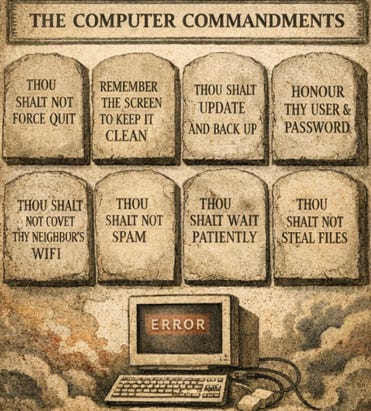
There’s an art to handling the computer that can’t be taught. The right hand always has to be in the relatively comfortable position (RCP) to create necessary tension. Selecting and scanning is tedious work. The user’s training covers both explicit and implicit subjects. If the user finds herself at a distant folder or program, she will never get lost.
Although there are lap computers and desk computers, they all only allow for reasonable mobility. There are many implicit conditions the computer puts forward. At best, these are agreements between the manufacturer, the user, and the computer itself. Its conditions are never made explicit. In each interaction the utmost respect is demanded. However robust and light a computer may be, the implicit condition is limited movement, or ideally no movement at all. Every user knows the rule for the computer.
The user has responsibilities towards the computer. The computer demands respect. Shutting up from the power button, refusing to wait despite being given clear signs, warnings and threats are forms of not only disrespect, but also utter ignorance and inconsiderate foolishness. Faced with malicious intent, he has no other chance than to retaliate.
And then there’s aging.
Not only are there old computers that demand special care, but a computer could suddenly crash, die out. This happens almost always without a warning, and will result in significant loss. However careful the user acts, there’s always personal files to lose.
Sometimes a crash will not result in complete dysfunction. A computer may be repaired, its functionality restored, but life has already drained from him. It can never be brought back to life.
When the interference from the outside world is lessened, even the user has to rest. For this to happen, some parts of the body need to be laid down, and for this the computer is prepared.
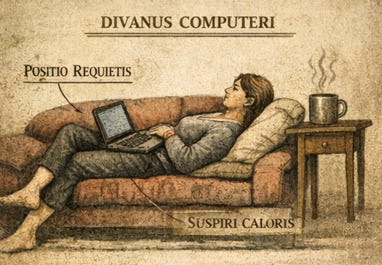
The gravitational center of the body is a perfect place for a laptop to unfold. A restful posture is a necessity for the plastic and metal to ferment. Small degrees of heat are welcomed.
Occasionally, there’s actual work for the computer to do, and only the computer can do that work. It’s never easy with the computer. It heats up, needs to be cooled down. The need is so dire, whole industries are there for the computer to do computer work. The user has no patience for the computer. There’s no respect for the heat.
The computer is never all serious. He likes to play games and gets good at them. He’s always on the lookout for new and old-style games. Among them, hide and seek is well-known, and disliked by most. Once a new keyboard, or the sound card that is proven to be easygoing is connected, the computer heats up with excitement. This is the game of surprises, but the winner is always set. Sometimes, suddenly, the connection appears to have been lost.
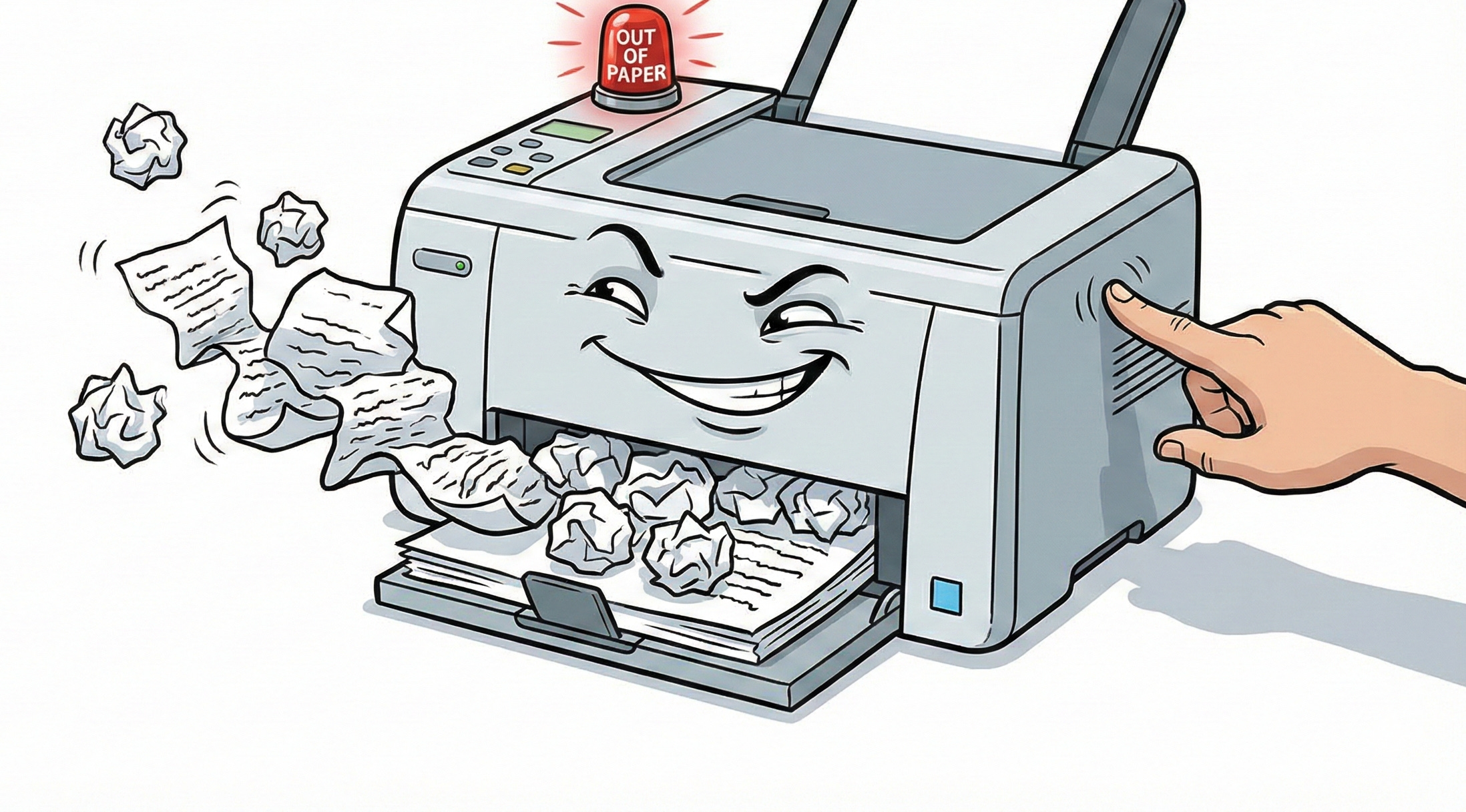
The computer is rarely alone. He befriended the printer years ago. The printer is a joyful creature. Slight knocks and pushes around the paper handler make it even more delighted. He can’t help but return to his favorite game: the printer has run out of paper again.
The computer has connections to a mafia-like network called the Operating System (more on this later also). The OS acts on behalf of the user. It is a deal with no benefactors.
They team up well. The user will jump into every opportunity. Using bribery, the OS has found a source of funding, mainly known as the Required System Security Update. The user will make sure everything is right.
Just as there are forms of life, there are also types of files. These are managed under the rule of the OS. Although there is a general agreement between these forces, the user learned to beware.
The computer sometimes crashes. Good computers less so, the more advanced work they can handle, the user will give them even more. The computer found a new term for this: the user error. This is everyone’s nightmare. No amount of backup is enough. One is destined to live through it again.
But the computer has more subtle ways to face its user. Everything heaps up. The undone work is the priority for the computer. He will store everything, one next to another, however redundant. He can’t help but save new documents. If it were up to him, he would always be creating new files.
The real danger is the floating mind of the user, self-deleting its own way of living. The way this thread manifests is as the limited space. The space always runs out, prepares to run out, alerts the user to the possibility of a run out.
It never happens. Everything accumulates. What were the final words of those files? They panicked and hid themselves behind folders. Some of them are mysteriously gone. Why is the user sad? The time will come for the user to update herself.
Deciding what to keep or what to get rid of is at the root of the computer’s ethics. Computer has a friend named the internet, and can keep the files there. Can you trust that friend? The friend has a price, and he’s forgetful. He will betray some of your files inevitably. What happens if they all disappear?
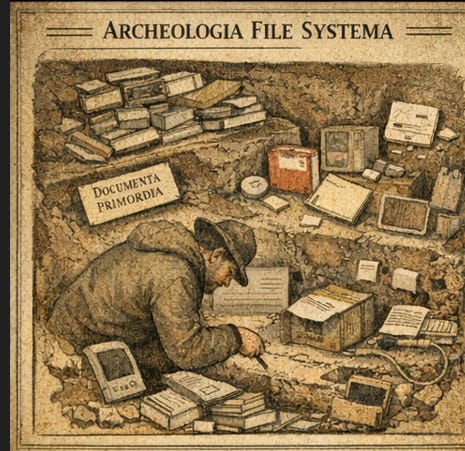
Nothing completely goes away if you’re attentive. They stay as artifacts of a life well lived. For the computer, the more bits there are, the better, fulfilling life the user has lived.
Some files break with time. The cause is mostly mysterious. It’s not rare that intruders come and go. When they invade some part of a neglected directory, it can get practically unseen. They are utterly ruthless. Simple, unassuming, innocent text files go broken every minute.
Psychoanalysis of computers shows that although silicon, the Ur-matter, is made of sand and water, the computer hates them both. This creates a tension in the body of the computer. The computer wants to do many things at once, but the user can’t. It is impossible to observe multiprocessing directly.
This should be enough for the study of the computer. It should be noted that this topic, as presented here, is not an acknowledged field within the academy. For decades, there have been complementary studies in the fields of computation, humanities, sociology, but not the actual study of the computer. Here we conclude the study of the computer in the actual world. We suggest the computerized person be taken as natural as the way a trilobite lived and went extinct.
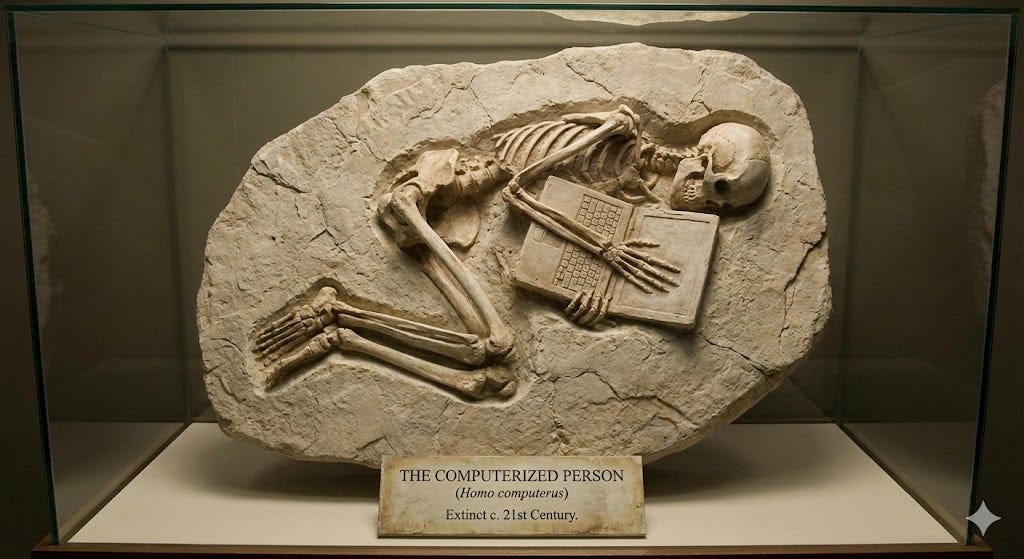
All of these concerns do not exclude the computer from the world.